Leadership briefing
Driving Success in the Modern Market: The Crucial Role of Company Values in Today’s Business Landscape
The Role of Company Values in Today’s Business Landscape
In a world saturated with businesses offering similar products or services, one factor often sets successful companies apart from their competitors: clearly defined company values. Today, now more than ever, company values play an integral role in shaping an organization’s identity, influencing its decision-making processes, and establishing a strong corporate culture. They serve as the company’s moral compass, guiding it through the ever-changing business landscape.
To start, company values are the core principles that distinguish a business from its competitors. These values give a company its unique identity, making it stand out from the rest. For instance, a company that prioritizes innovation will be known for its cutting-edge products or services, while a company that values sustainability will be recognized for its environmentally friendly practices. Having clear, well-defined company values provides a unique selling proposition that can greatly enhance a company’s market position.
Moreover, company values play a critical role in decision making. They act as a guiding light, helping businesses make choices that align with their core principles. For example, a company that values transparency will prioritize open communication and honesty in its dealings with customers, employees, and stakeholders. This can, in turn, build trust and loyalty among these key stakeholders, resulting in long-term success.
In addition to shaping a company’s identity and influencing its decisions, company values are fundamental in establishing a strong corporate culture.
Company values define the way a company operates internally, fostering a work environment that encourages employees to uphold these values in their day-to-day tasks.
A strong corporate culture, driven by well-defined values, can boost employee morale, increase productivity, and foster a sense of belonging among employees.
In recent years, it’s become apparent that customers are increasingly looking to do business with companies that share their values. In a competitive marketplace, customers find it easier to trust and connect with companies that uphold values they personally believe in. As such, company values are not only essential for attracting new customers but also for retaining existing ones.
However, it’s not enough for a company to simply state its values; it needs to live by them too.
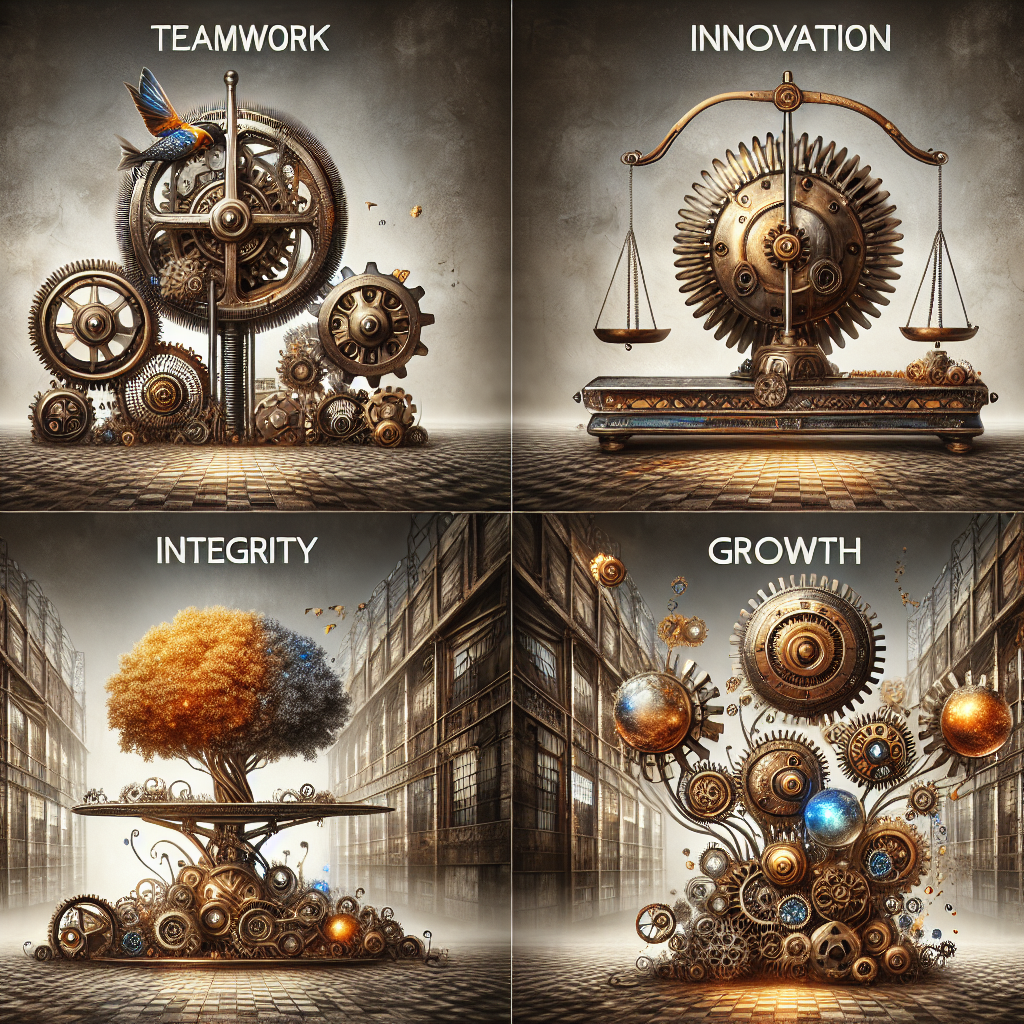
Actions speak louder than words, and customers, employees, and stakeholders alike can quickly identify a mismatch between a company’s stated values and its actions. Therefore, it’s crucial for businesses to ensure that their values are reflected in their actions, policies, and overall business operations.
In the same vein, employees are more likely to stay loyal to a company when they feel that their personal values align with the company’s. A study by Stanford Graduate School of Business found that employees who perceive their workplace as having a high degree of value congruence, that is, a close alignment between their values and their company’s values, tend to demonstrate greater commitment, satisfaction, and lower turnover.
In conclusion, the role of company values in today’s business world cannot be overstated. They serve as the driving force behind a company’s identity, decision-making processes, and corporate culture. Businesses that clearly define their values, and consistently act in alignment with them, are likely to enjoy competitive advantage, foster strong relationships with customers and employees, and ultimately, achieve long-term success. As the business landscape continues to evolve, the importance of company values remains timeless and ever pertinent.